Gaming is the “entry drug” to technology for most 8-16-year-olds. However, the professional application of AI in gaming goes far beyond “bad guys” trying to catch you. It involves Computational Creativity and Dynamic Difficulty Adjustment. AI is the reason modern games feel like living, breathing universes rather than static screens.
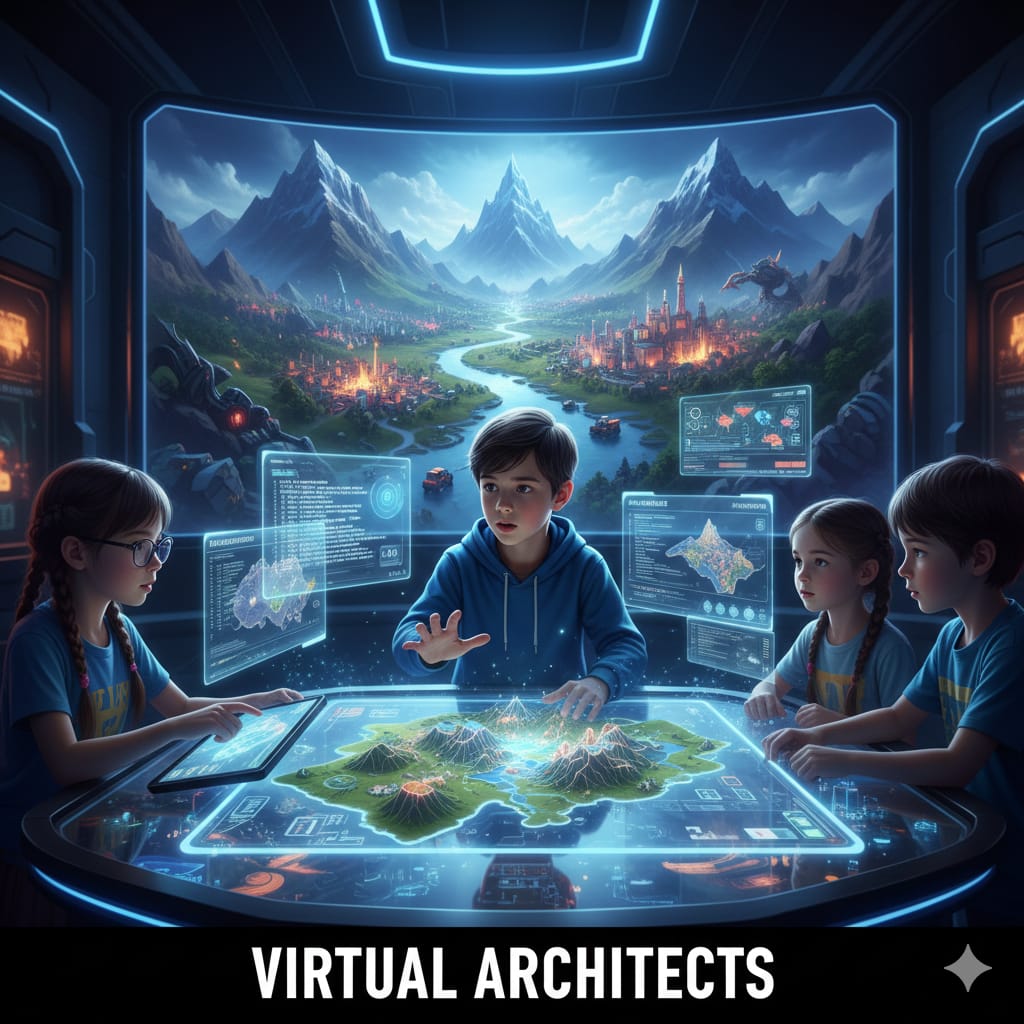
One of the most complex aspects is Procedural Generation. Instead of designers drawing every single blade of grass in a game like Minecraft, they write an AI “seed.” This seed contains the rules of nature. The AI then uses these rules to build mountains, rivers, and caves. This teaches students a vital professional lesson: Scalability. By writing one clever AI program, you can create a million different worlds.
Furthermore, AI acts as a “Social Engine.” In multiplayer games, AI helps match you with players of similar skill levels so the game stays fun. It also monitors chats to keep the community safe from bullying. For parents, this is a great way to talk about Balance. AI helps the game stay exciting, but it’s the human’s job to know when to put the controller down.
Pro-Tip for Students: Many games now allow “Modding.” If you learn how the AI in your favorite game works, you can start writing your own rules for the game world.
Discussion Question: * If a game was so “smart” that it knew your every move, would it still be fun to play?