We often tell students to “study hard,” but how does a machine study? This is the world of Machine Learning (ML). In professional circles, ML is defined as the use of algorithms that improve automatically through experience. For a school leader or parent, it’s helpful to think of this as “teaching by example” rather than “teaching by rules.”
There are three primary “classrooms” for AI:
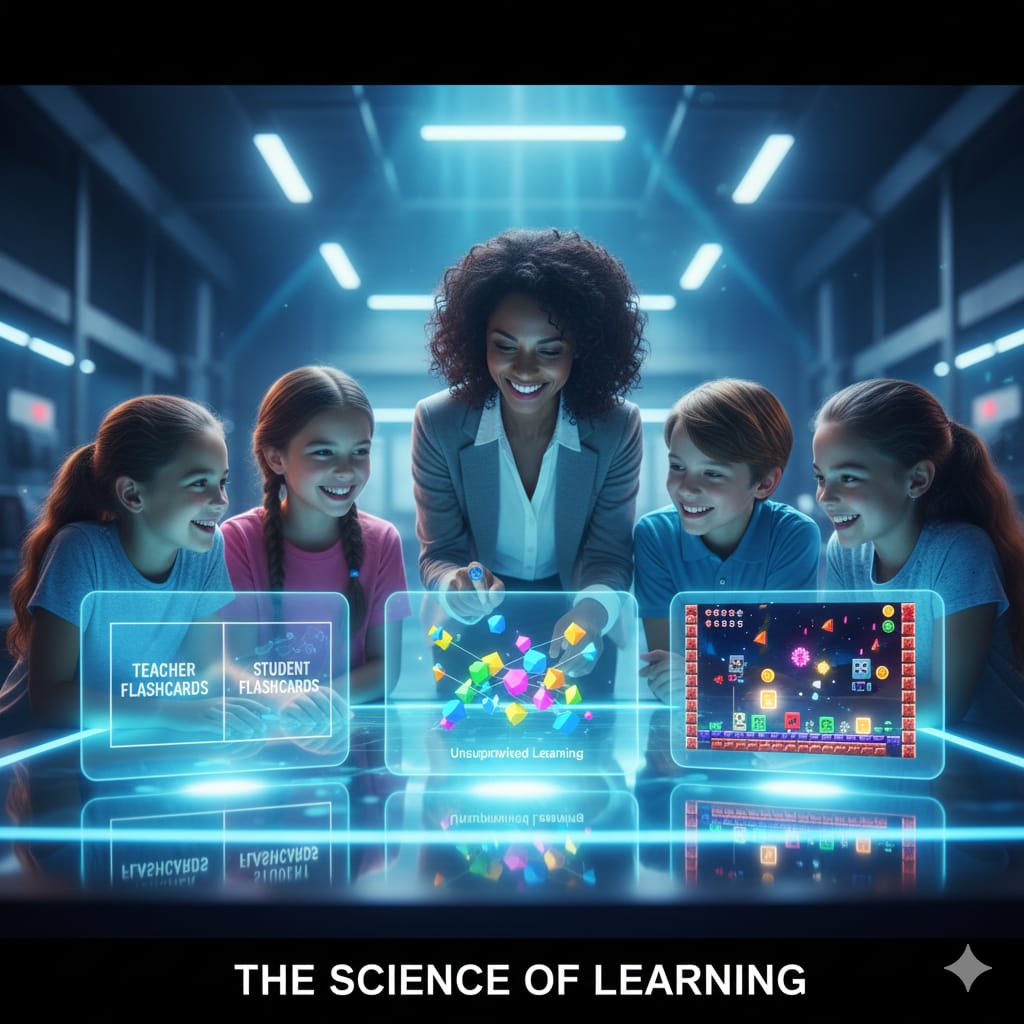
Supervised Learning: This is like a teacher-led classroom. The AI is given labeled data (e.g., “This is a photo of a bridge; this is not”). The AI learns to associate labels with features.
Unsupervised Learning: This is like a playground. The AI is given a mess of data and told to “find what’s interesting.” It might group items by color, shape, or size without being told what they are.
Reinforcement Learning: This is like a video game. The AI tries a task, fails, tries again, and gets a “reward” when it succeeds. Over millions of repetitions, it becomes a master.
Understanding this process helps students realize that AI is not magical; it is mathematical. It relies on Trial and Error. When a student sees an AI make a mistake, they shouldn’t think the computer is “broken.” Instead, they should see it as a student who hasn’t had enough “practice” yet. This builds a growth mindset in the human student as they realize that even the most advanced tech in the world needs time to learn.
Pro-Tip for Educators: Use “Teachable Machine” by Google in the classroom to let students see this training process in real-time.
Discussion Question: * How is the way an AI learns to play a game different from the way you learn to play a game?