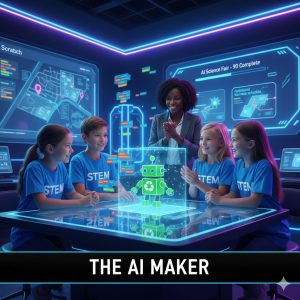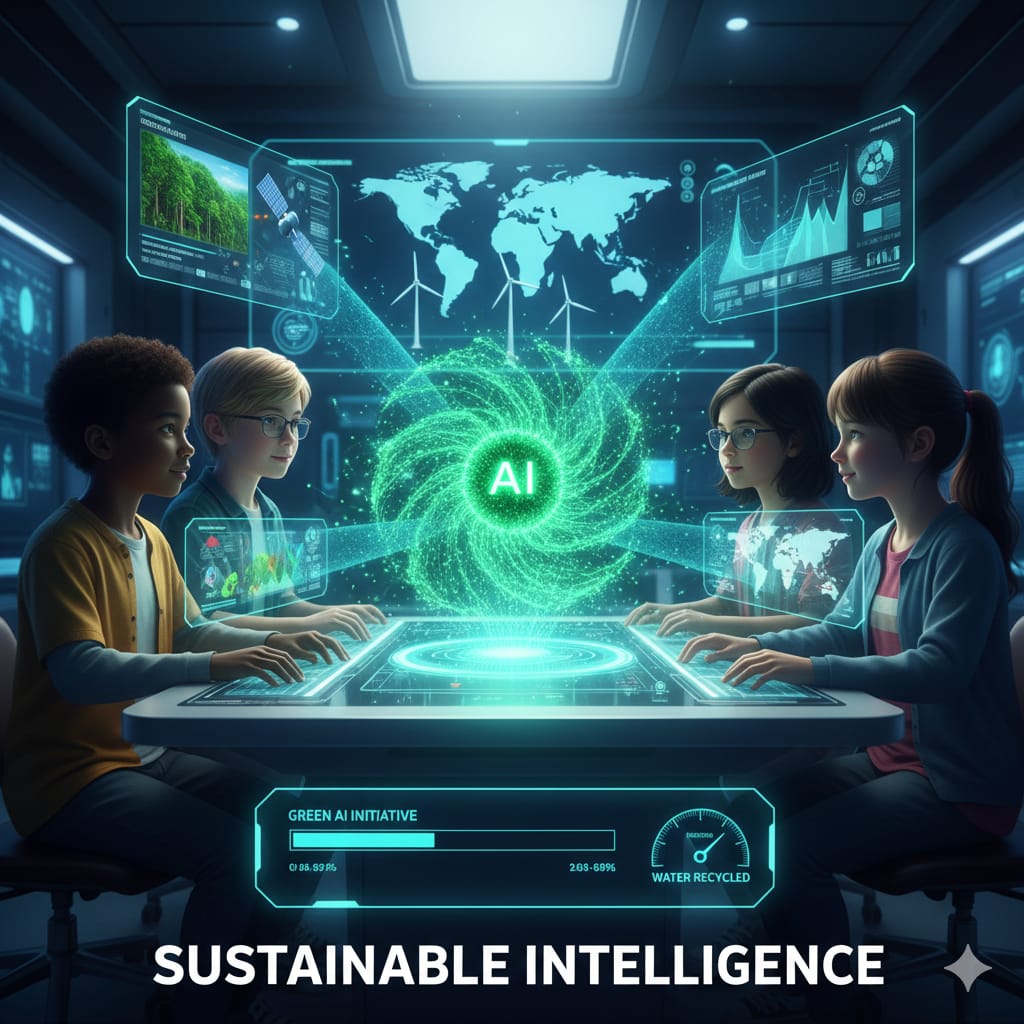
As we look toward the year 2026 and beyond, the most professional and urgent conversation we can have is about AI and Earth. Students today are incredibly “Eco-Conscious,” and they need to know that technology has a physical footprint. While AI lives in the “Cloud,” the Cloud is actually made of massive, energy-hungry buildings called Data Centers.
The positive impact is massive. AI is currently being used to track the migration patterns of endangered animals and to predict where wildfires might start. In “Smart Cities,” AI optimizes traffic lights so cars don’t idle as long, which reduces pollution. It is a powerful tool for Resource Management.
However, we must also be honest about the energy cost. The computers that run AI require enormous amounts of electricity and water for cooling. The “10/10” professional approach is to strive for Efficiency. We are teaching the next generation to build “Tiny AI”—models that are just as smart but use 90% less power. For school principals, this is a perfect bridge between the Science and Computer Science departments.
Pro-Tip for Parents: Talk to your children about “Digital Minimalism.” Using AI intentionally, rather than just for “boredom,” helps save energy in the long run.
Discussion Question: * If you had to choose between a very smart AI that used lots of power and a slightly “dumber” AI that was eco-friendly, which would you pick?