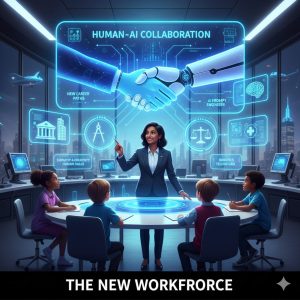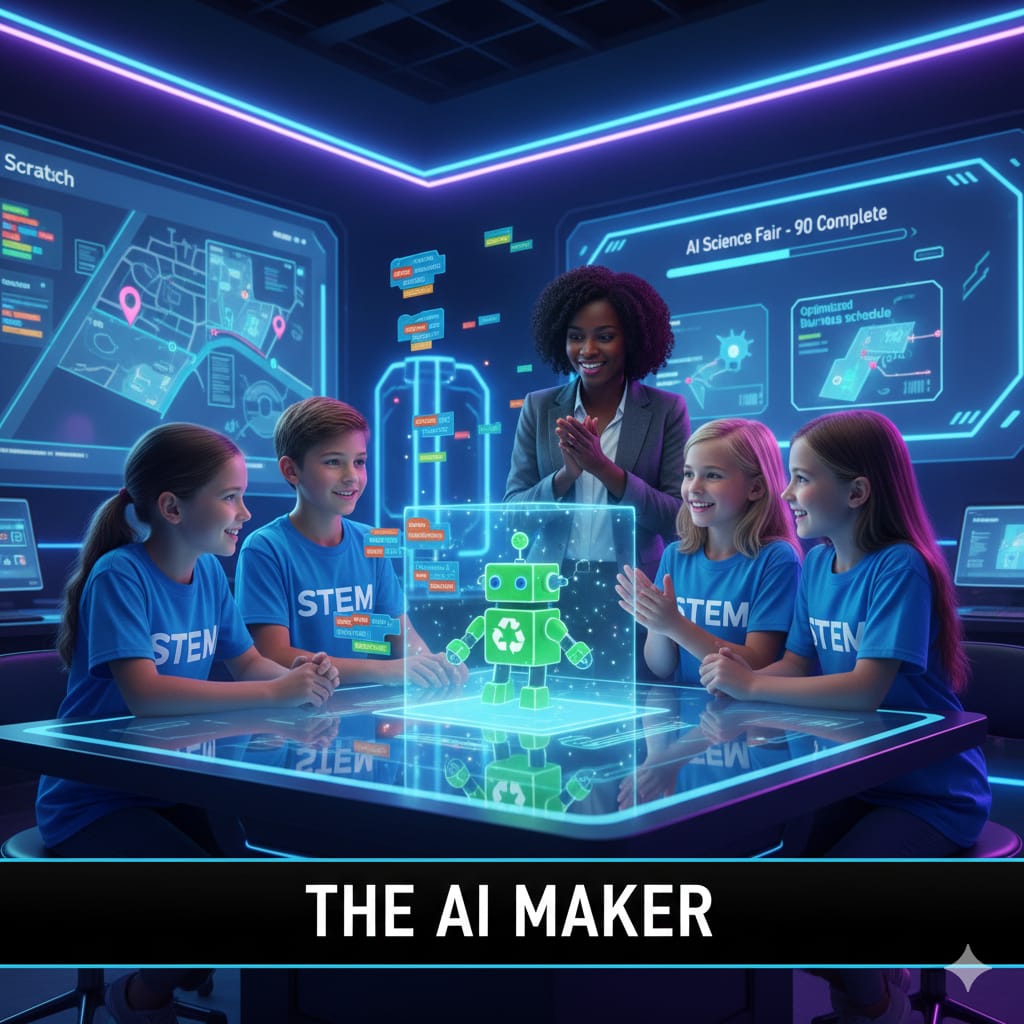
The final blog in our series is about Action. We don’t want our students, parents, or principals to be passive observers of the AI revolution. We want them to be Makers. The “Professional Touch” here is moving from “What can AI do for me?” to “What can I build with AI?”
For students, this starts with Computational Thinking. This is the ability to break a big problem down into small steps that a computer can understand. Whether you are using Scratch, Python, or a “No-Code” AI builder, the logic is the same. You are the architect. You are the one identifying a problem in your community—like a messy park or a confusing bus schedule—and using AI to find a solution.
For schools, this means creating “Sandboxes”—safe places where students can play with AI without fear of breaking things or being graded harshly. For parents, it means celebrating the “failed” experiments. Maybe the AI your child built didn’t work perfectly, but they learned why it failed. That “why” is the most valuable lesson in the world. As we close this series, remember: AI is the most powerful “pencil” ever invented, but you are still the one holding it.
Pro-Tip for Educators: Host an “AI Science Fair.” Instead of volcanoes, have students show off AI models they trained to recognize different types of recycling.
Discussion Question: * Now that you’ve read all 10 blogs, what is the first thing you want to create using AI?