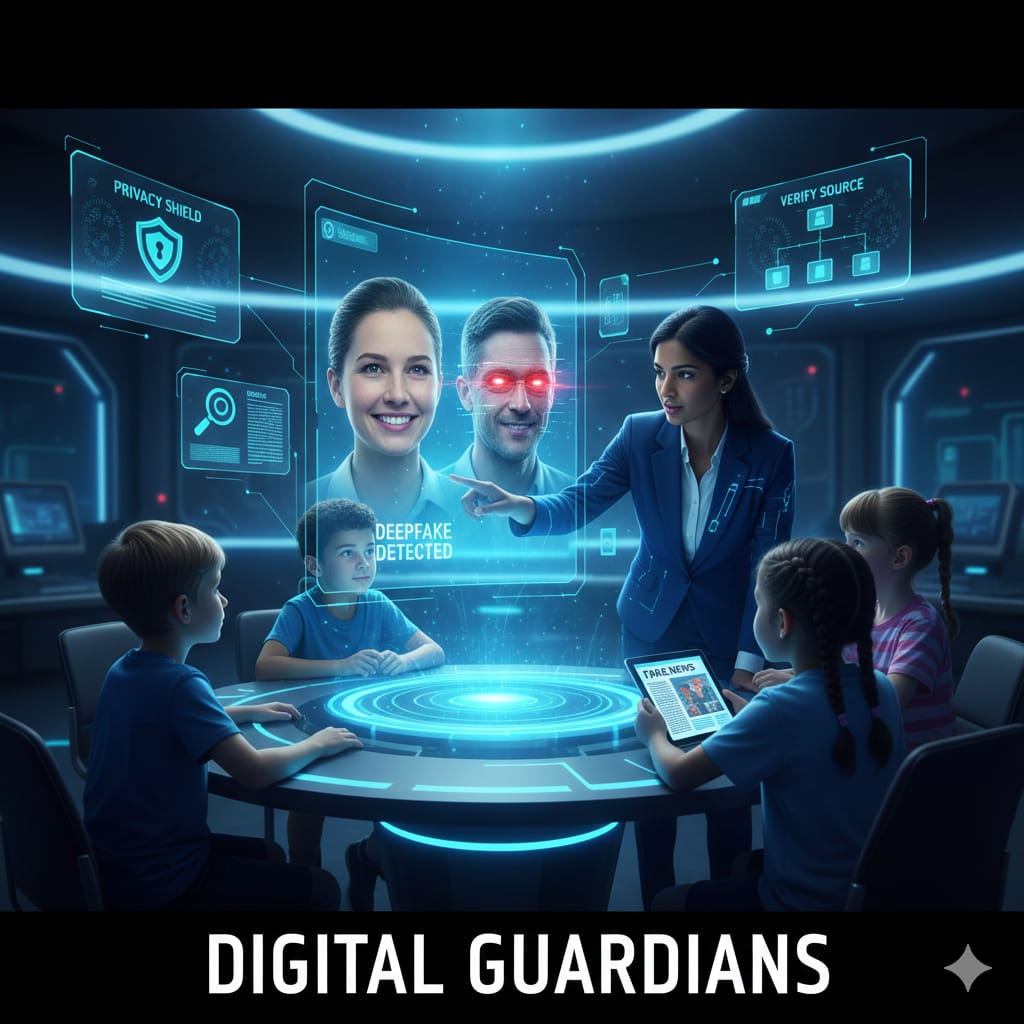
Safety is the foundation of any “10/10” educational series. In 2026, the biggest threat to digital safety is Misinformation. Deepfakes—AI-generated videos that look 100% real—can be used to spread lies or trick people. For students in the 8-16 age group, this is a vital lesson in Information Literacy.
Being “Safe” in the age of AI means being a skeptic. We teach the “Verify then Trust” method. If a video shows something shocking, check three other news sources before believing it. If a “friend” asks for your password over a voice memo, call them on the phone to make sure it’s really them. AI can mimic a voice, but it can’t mimic a real, live conversation.
Parents and principals must also emphasize Data Sovereignty. Students should understand that their “Data” is their “Property.” Every time they chat with an AI, they are giving away a piece of their property. We must teach them to read the “Privacy Policy” (or at least the summary!) to ensure their information isn’t being sold or used in ways they didn’t agree to. Safety isn’t about hiding from AI; it’s about knowing how to walk through the digital world with your eyes open.
Pro-Tip for Parents: Set up a “Family Password”—a secret word only you and your kids know. If someone uses AI to fake your voice, your child can ask for the secret word.
Discussion Question: * How can we tell the difference between a funny AI parody and a harmful Deepfake?